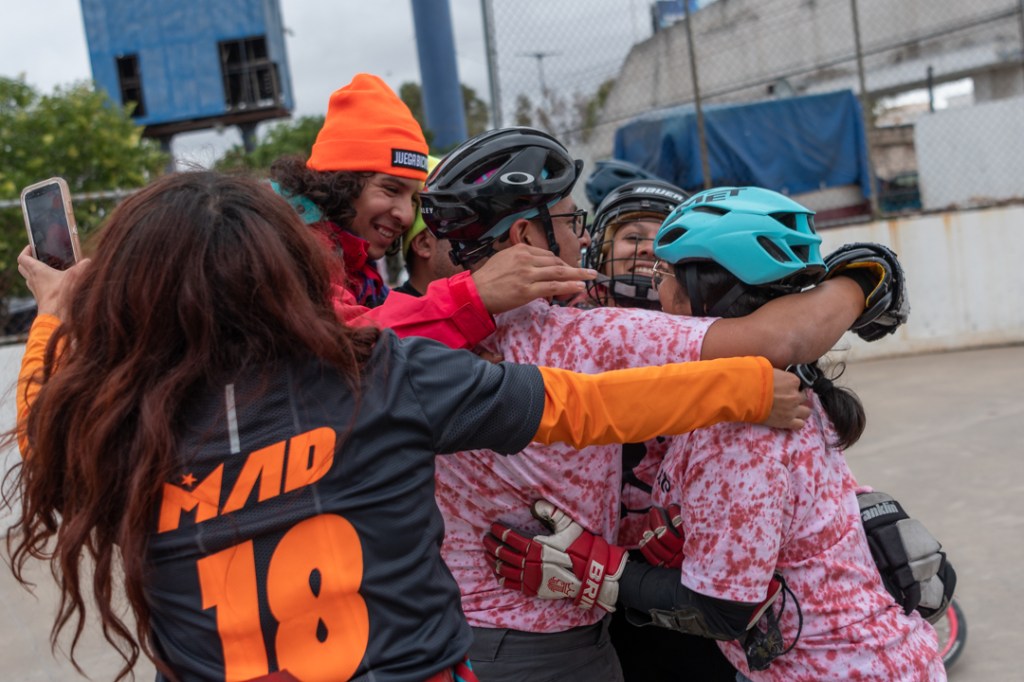
Hace unos años había invitado a jugar Bici Polo a una amiga, ella me dijo apenada, que a su mamá no le agradaba la idea de que fuera a practicar, porque ella creía que ese no es un lugar para una “señorita”, sonrojada y con vergüenza mire mis rodillas maltratadas (cicatrices) y acomodé mi cabello un tanto húmedo por el sudor, pensé que tal vez tenía razón, con el tiempo entendí que efectivamente no era una señorita.
No es un secreto que en nuestro país no exista una cultura deportiva, tomando en cuenta que hay un sin fin de problemas por resolver: la pobreza, la desigualdad, el cambio climático, la violencia de género, y una gran lista que no podría abarcar aquí. Según el INEGI en 2021, 39.6% de la población de 18 y más años de edad en México dijo ser activa físicamente. A todo esto agregamos como los medios tradicionales han hecho del deporte un espacio de mitos, estereotipos y sexismos.
Practicar un deporte es un privilegio, y ocupar el espacio siendo la minoría conlleva una lucha de narrativas que pocas veces incentivan a muchas otras personas a continuar la práctica. No se trata solo de querer practicar y ya, en la ruta de este camino muchxs tiene que lidiar con el simple hecho de combatir las narrativas de casa. A lo largo de estos años más de una amiga me ha hecho comentarios de lo que piensa sobre su cuerpo en el deporte, por ejemplo; lo débil que es su cuerpo, el miedo que le tiene a caerse, lo poco compatible que es con los deportes, lo peligroso que puede ser estar en un deporte con hombres compartiendo la cancha.
A la mamá de mi amiga no le voy a negar el dolor que se siente tener un moretón, lo complejo que es compartir el espacio con los hombres, o lo doloroso que es jugar y estar en mi ciclo menstrual, pero lo que sí puedo decir es que practicar un deporte o realizar alguna actividad física, constituye el desarrollo e identidad de las personas, los espacios se vuelven la oportunidad de interactuar y co crear una comunidad, se experimenta la fortuna de explorar y conocer tu cuerpo-mente, y el cuerpo es un vínculo de libertad para cualquier persona.
Hoy 8 de marzo queremos invitar a la reflexión sobre las narrativas que practicamos día a día. Los estereotipos han limitado a muchas mujeres/ disidencias, estar libres y segurxs de estar presentes en los deportes. El bici polo está lleno de oportunidades para hacer las cosas diferentes y con ello tenemos la libertad y responsabilidad de mejorarlo por y para nosotrxs y por supuesto para las próximas generaciones.
Han pasado años sobre aquel comentario, y pudé repensar lo que era señalado como “señorita”, a pesar de que años atrás fui víctima de cumplir el “estándar femenino”, ahora entiendo mi ímpetu por continuar con esta euforia por tener las rodillas raspadas, intentando meter un gol o intentar dar esa vuelta que me da miedo, aunque ojo, no se trata de salir hacer lo que sea sin tener cuidado, porque parte de conocer tu cuerpo es cuidarlo, procurarlo. Los motivos pueden ser diversos para muchas de nosotras. Nos gusta estar dentro de la cancha; explotar de felicidad, de energía, ser fuertes, ser unas jugadoras de bici polo.
Por: Diana Mendiola
Fotografía: @andrsoghrca
English Version
The embarrassment of scarred knees
A few years ago, I invited a friend to try bike polo. She, ashamed, told me that her mom disapproved of her trying it because that was no place for a “lady.” I blushed, and with shame, I looked down to see my knees (scarred), fixed my hair that was wet from sweating, and thought that maybe her mom was right. With time I understood that, indeed, I was not a “lady.”
It is not a secret that our country does not have a sports culture, considering we have too many things to address first: poverty, inequality, climate change, gender violence, and I could go on forever. According to INEGI, in 2021, only 39.6% of the population over 18 years in Mexico stated being physically active. On top of this, we can add that mainstream media have portrayed sports as a space full of myths, stereotypes, and sexism.
Being able to practice a sport is a privilege, and occupying space as a minority entails fighting against the preset narratives that very few times incentivize people not to give up the sport. It is not only about having the desire to practice. Along the way, you will also have to fight even before leaving your own home beliefs. Throughout the years, more than one girlfriend has shared with me what they think about their bodies when they practice a sport. For example, how weak their bodies are, how scared they are to injure themselves, how incompatible they feel with sports, and how dangerous it can be to practice a sport with men and share the same court.
I can’t deny my mom’s friend the fact that it hurts to get a bruise, how complex it is to share a space with men, or how painful it is to play when being on my period. I can assure her that practicing a sport or physical activity is essential for developing ourselves and our identities. The shared spaces provide you with an opportunity of interacting with others and co-creating a community. You can have the fortune of getting to know your body and mind. I can tell her that bodies are linked to freedom.
Today, March 8th, we invite you to reflect on the narratives we tell ourselves. The stereotypes have limited many WTFGNCs from feeling free and safe participating in a sport. Bike polo is full of opportunities to change things. This gives us not only a chance but the responsibility of improving our sport for us and future generations.
Years have passed by after knowing my friend’s mom’s thoughts. I have been able to think about what is labeled as “lady-like” and realize that in the past, I tried to fit the stereotype for women. Now I understand and embrace my drive to continue doing what has made my knees so scarred, like trying to score a goal or a fast turn, of course, without taking unnecessary risks and taking care of my body. Each one of us might have different reasons for why we play. I enjoy being on the court, feeling happy, energetic, and strong, and being a bike polo player.
By: Diana Mendiola
Photo: @andrsoghrca
Translation: Dev Barrera
 BICI POLO MÉXICO
Deja un comentario